
Winners of 2026 Restore the Wild Artwork Competition Chosen
By Molly Kirk/DWR
Photos by Meghan Marchetti/DWR
It’s not the norm for crowds to gather around to observe bats hanging on the wall, but during the Opening Reception of the Restore the Wild Artwork Competition on March 6, more than 350 people enjoyed viewing pieces of art depicting the Rafinesque’s big-eared bat (Corynorhinus rafinesquii) at The Gallery at Main Street Station in Richmond, Virginia.
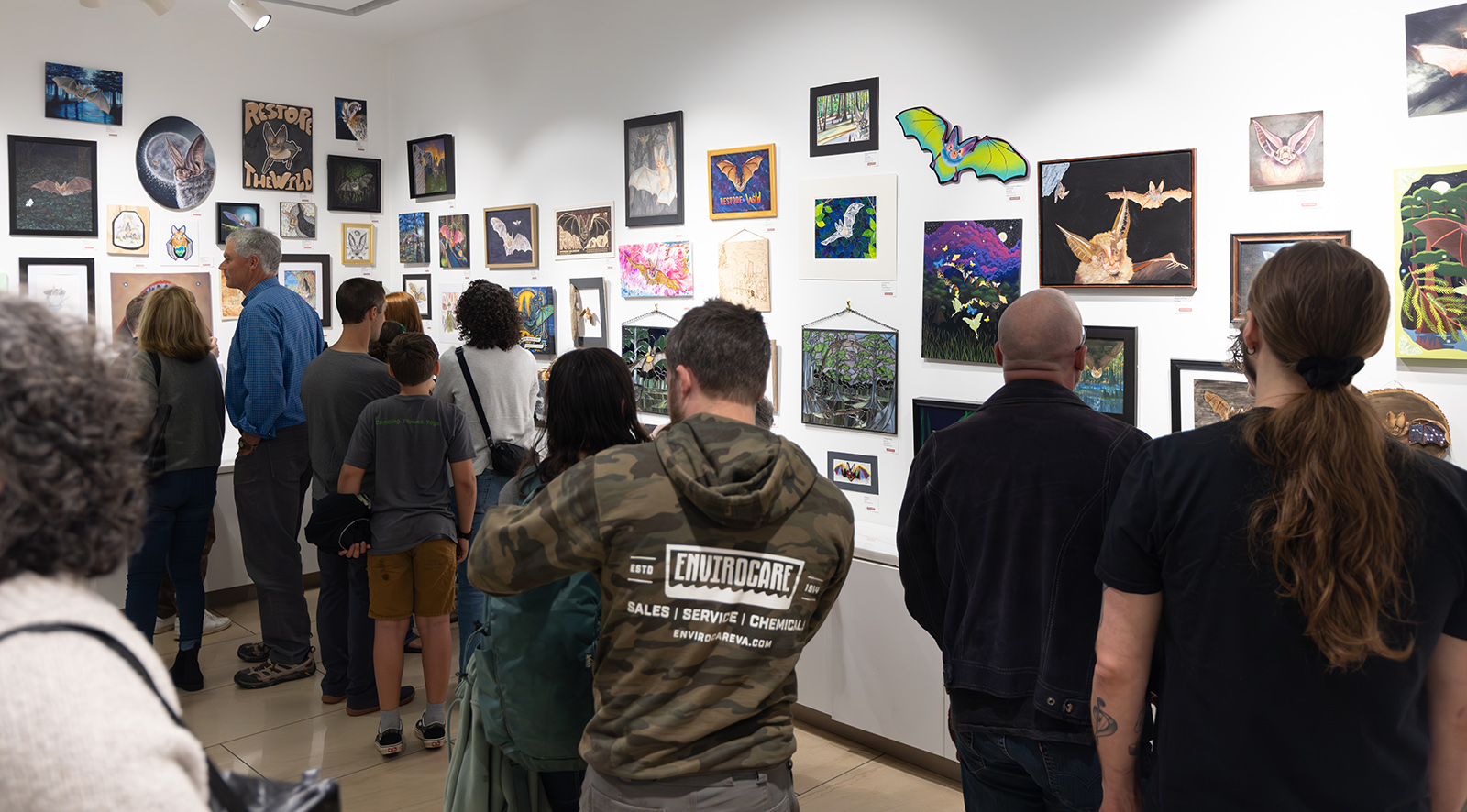
Artists from all over Virginia and other states submitted more than 250 creative entries for the competition, which each year calls for submissions from the public that reflect Restore the Wild’s mission to restore and create natural habitats vital to the survival of Virginia’s wildlife. Annually, the competition designates a wildlife species to be the focus of the artwork, and for 2026 it was the Rafinesque’s big-eared bat, a state-endangered bat that lives in bottomland hardwoods and swamps in the Coastal Plain. With enormous ears and large, protruding facial glands, the Rafinesque’s big-eared bat gave artists a unique challenge that they met with incredibly varied mediums and interpretations.
A judging panel chose winners in Natural History Illustration, Artistic Expression, and two Youth age group categories as well as artwork to be used throughout 2026 to help promote Restore the Wild. The winners were announced and recognized at the Opening Reception of the artwork exhibit on March 6, which included educational speakers, a silent auction and raffle to benefit Restore the Wild, and appearances by live little brown bats thanks to Bat Conservation and Rescue of Virginia. All of the more than 250 pieces entered into the competition appear in the exhibition.
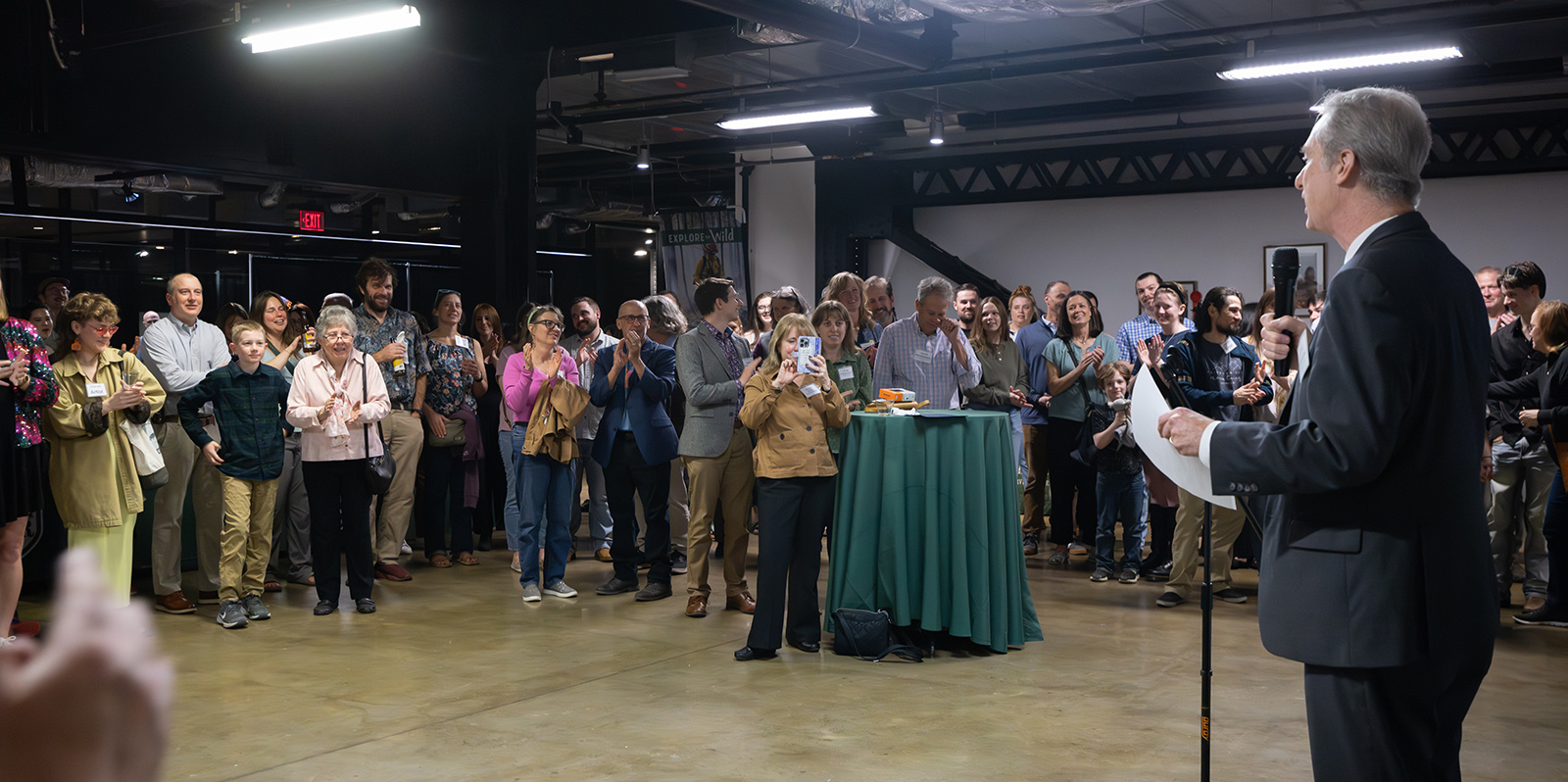
Virginia Secretary of Natural and Historic Resources David Bulova spoke at the Restore the Wild Artwork Exhibition Opening Reception.
Michelle Gates of Fairfax, Virginia, created the “Echolocation” painting that won the Natural History Illustration category, which asked artists to create realistic scenes depicting the species in its natural habitat. Gates is an outdoor enthusiast who enjoys scuba diving, kayaking, hiking, and wildlife photography. She prioritizes native plants in her garden to support insects and the food chain.
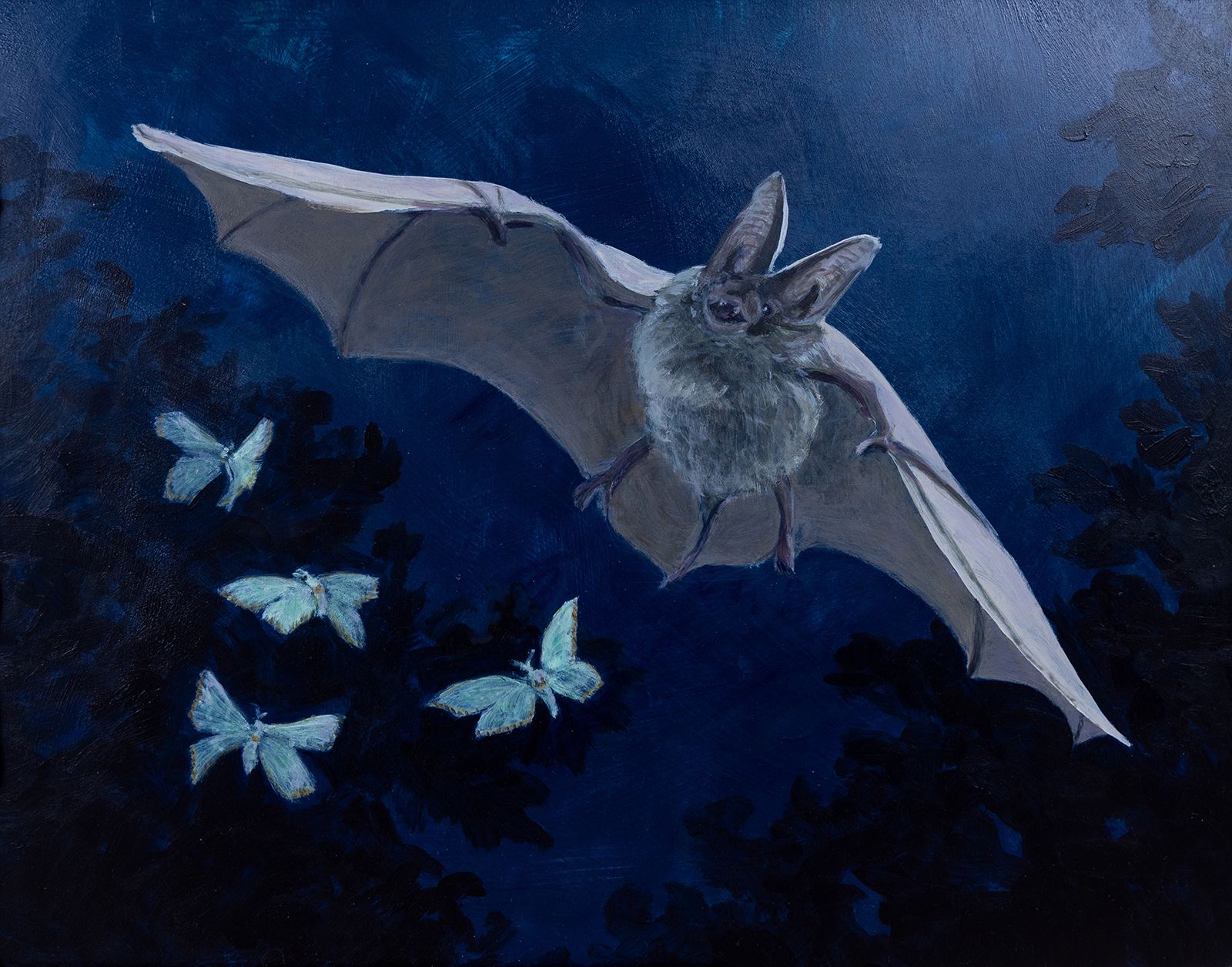
Michelle Gates’ “Echolocation,” the Natural History Illustration category winner.
“Winning the Natural History Illustration category feels validating as both a naturalist and as an artist. I put a lot of research into this,” Gates said. “I wanted to show [the bat] hunting moths (~90 percent of its diet). I ultimately decided on the angle wing emerald [moth] because they’ll eat bald cypress as caterpillars. I was intrigued to find out that this [bat] species’ historical range seems to coincide with historical range for cypress swamps. Now that we’ve cut down and drained a lot of those areas, the bats have moved into human-made structures.”
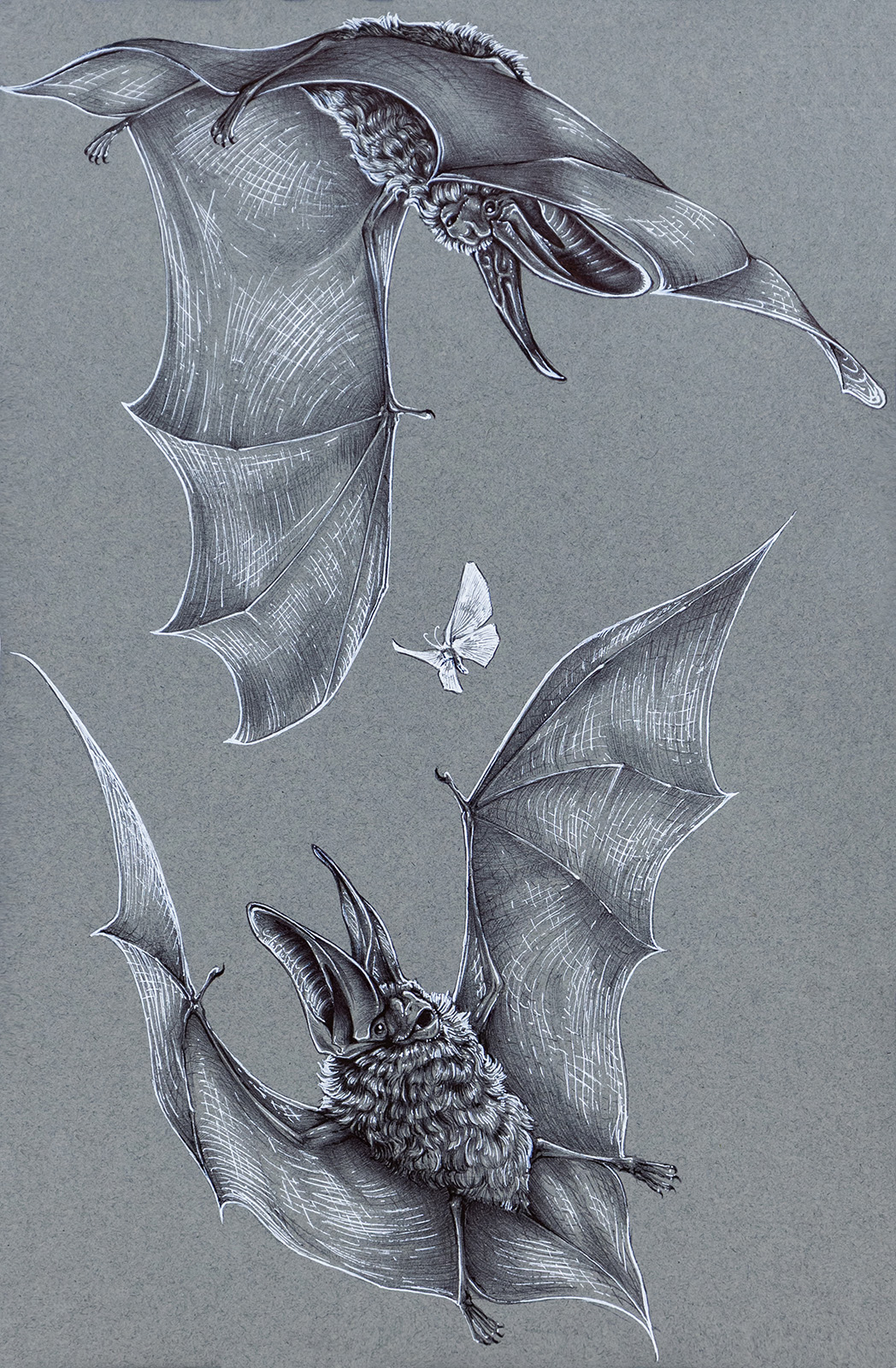
Cassandra Picard’s “Happy Hunting,” the Artistic Impression category winner.
Cassandra Picard, of Broadlands, Virginia, won the Artistic Expression category, which invited artists’ creative interpretation of the species and their habitat, with her entry titled “Happy Hunting,” an ink pen drawing. “Being one of the winners in this competition is very exciting! Being able to contribute to conservation through a passion of mine is a dream come true,” said Picard. “I was so excited to learn the focal species this year, as wings and winged creatures are some of my favorite things to draw. Bats have always been adorable to me, so this was a perfect opportunity!” Picard is a biologist who works with threatened and endangered tortoise species. “I do my best to spread the word about protecting them and all threatened wildlife,” Picard said.
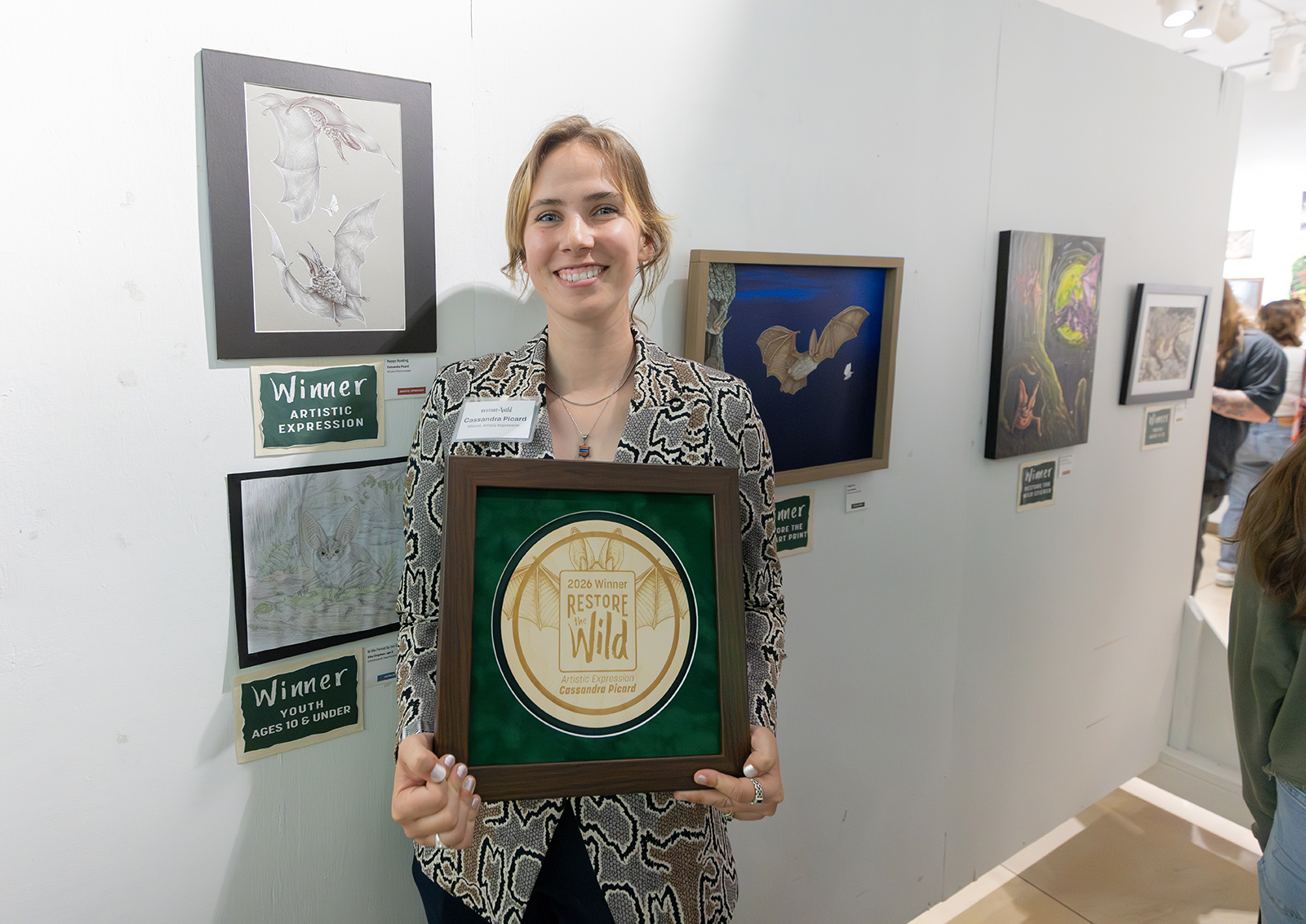
Cassandra Picard celebrating her win in the Artistic Expression category.
In the Youth age group categories, Emma Bridges of Brambleton, Virginia, won the 11-17 category, while Ellie Chapman of Madison, Virginia, topped the 10 and Under category. Both Bridges and Chapman value nature walks and exploring the outdoors. Bridges’ work “I’m All Ears” was a colored pencil drawing that impressed the judges. “I completely fell in love with the Rafinesque’s big-eared bat as soon as I saw a picture,” Bridges said. “I’m happy I was able to do him justice. [This win] means so much to me because I put a lot of time and energy into my art, and I’m very passionate about every piece I make. I learned that the Rafinesque’s big-eared bat’s diet consisted mainly of moths and bugs, so I wanted to include that in the drawing. I had to read through research papers to find the type of moths they eat, so I could make it as realistic as possible and I chose the lettered sphinx moth.”
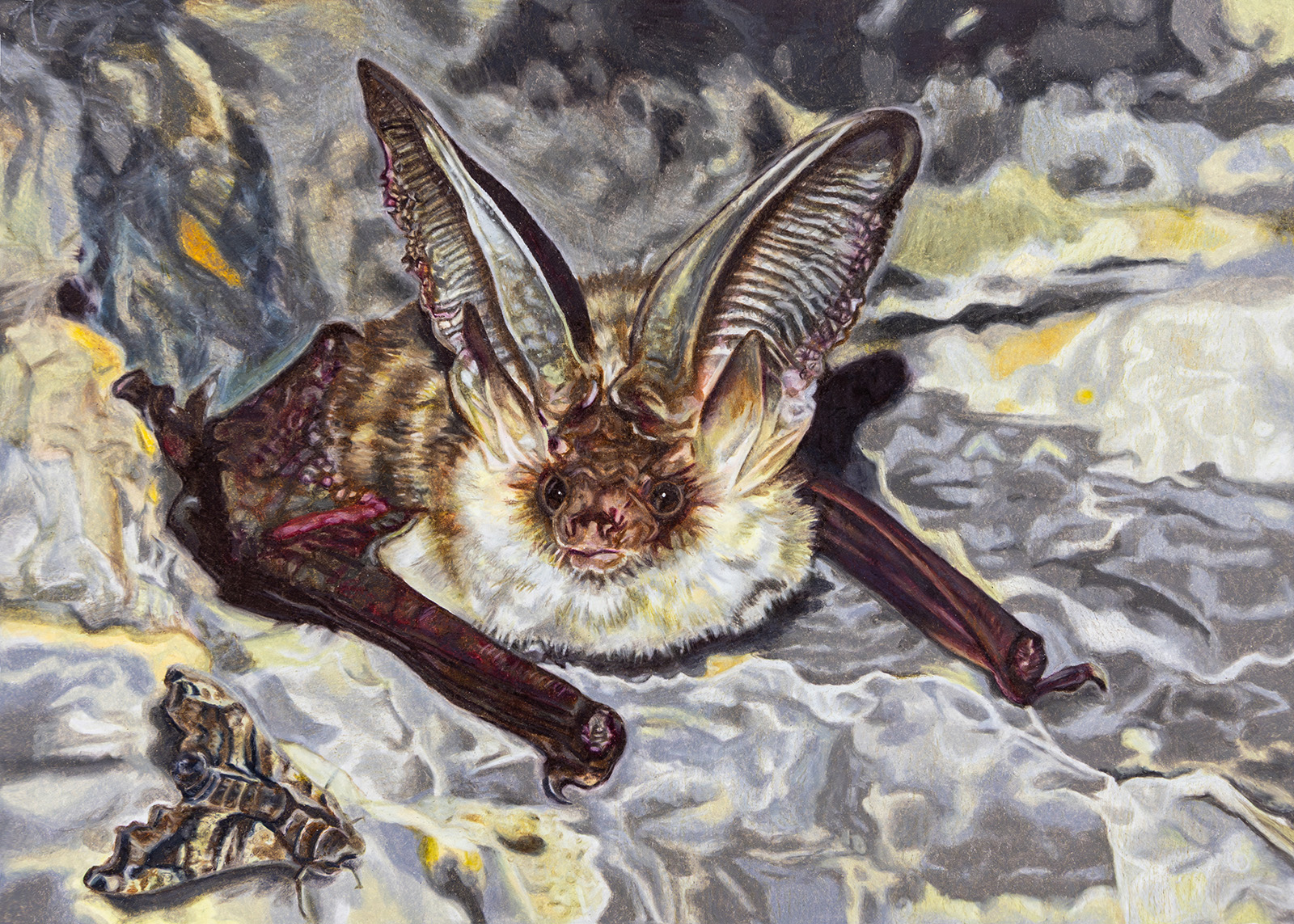
Emma Bridges’ “I’m All Ears,” the Youth, 11-17 winner.
Chapman was inspired by the thought that her piece “In the Forest by the Creek,” in graphite and colored pencil, might help expand awareness of the Rafinesque’s big-eared bat. “I decided to draw the bat and enter the competition because when my mom showed me the bat online I thought he was really cute,” she said. “When I learned that the bat is endangered, I thought maybe my picture might help more people like them and then that would help the bats be less endangered someday.”

Ellie Champman’s “In the Forest by the Creek,” the Youth, 10 and Under winner.
The judges selected Joyce Cornelius’ watercolor and acrylic painting “Twilight Trio,” an entry in the Natural History category, to be reproduced as the 2026 Restore the Wild Fine Art Print. “It is gratifying to know that others admire something I’ve created. I hope this piece of art will be enjoyed by many,” said Cornelius, of Hurt, Virginia.
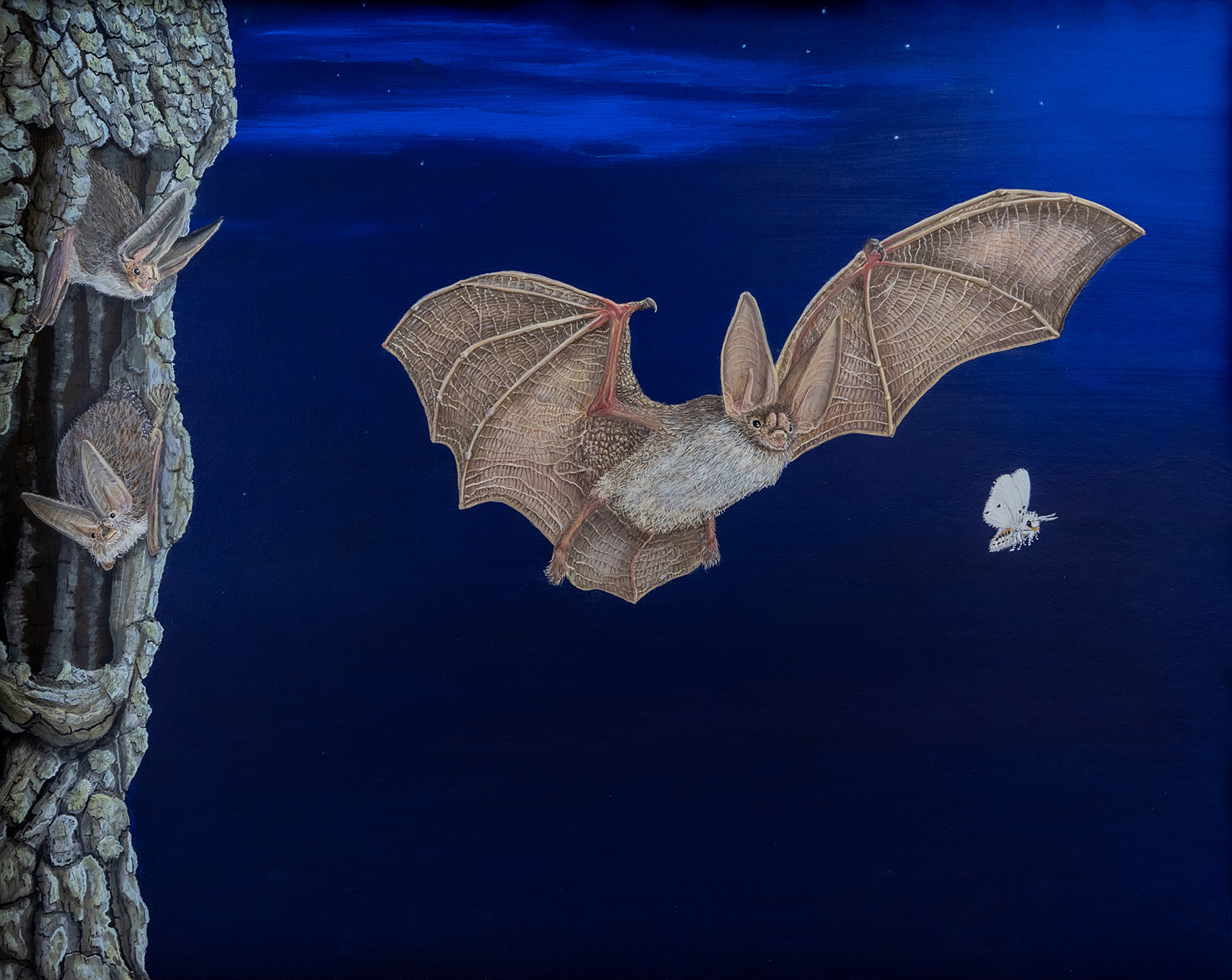
Joyce Cornelius’ “Twilight Trio,” winner of the Fine Art Print category.
“I was inspired by the subject matter as I’ve always been interested in bats. Since I usually try to incorporate trees into my painting, this combination was a great opportunity. Having never done a nighttime painting before I tried to make it a striking contrast of light and dark. One of the interesting things I learned about the Rafinesque’s big-eared bat was that they are distinguished from other big eared bats by the white hair on their belly, gray/brown back, and that the hair on their toes extends past the claws. This was the main reason I chose to paint three bats, so I could show the back, belly, and toes.” Cornelius has restored the wild in her own life by farming native pollinator wildflowers and grasses for their seeds, which are used in restoration projects to re-establish disturbed habitats.
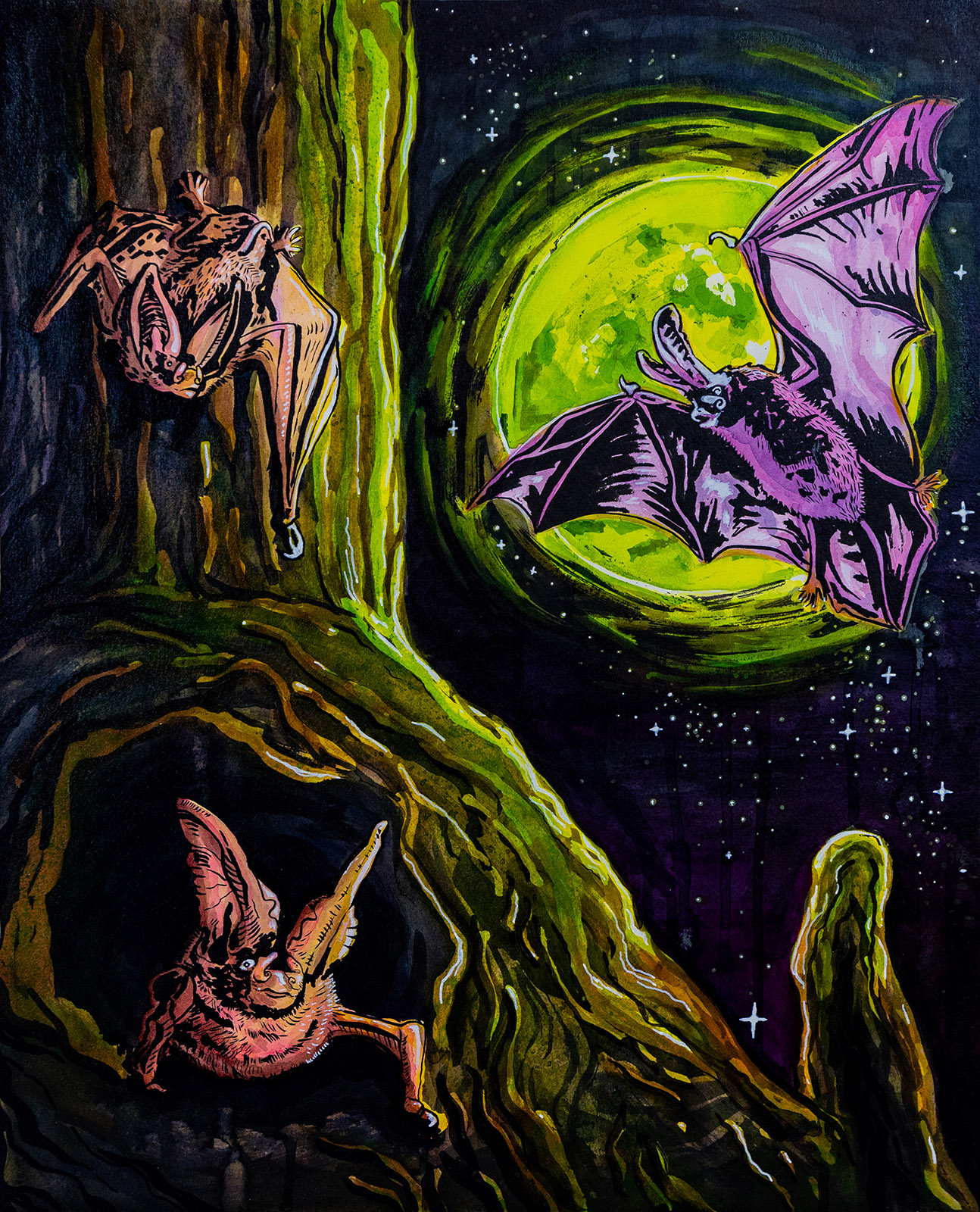
Grace Mae Huddleston’s “Rafinesquii in the Taxodium,” winner of the Sticker category.
Grace Mae Huddleston’s colorful “Rafinesquii in the Taxodium,” created with liquid ink and acrylic paint pen, was chosen from the Artistic Expression category to be reproduced as the 2026 Restore the Wild sticker. “As a lifelong lover of science and nature, it has been a joy to spend much of my art career exploring these topics from realistic and fantastical angles,” said Huddleston, of Richmond, Virginia. “The Rafinesque’s big-eared bat is such a charismatic creature, and I had so much fun learning about its roosting and feeding habits. Knowing that the art piece I made about this bat will be used to draw attention to the species, to help spread knowledge, awareness, and joy is such a privilege,” said Huddleston. “As for the inky style with fantastical colors—I am an avid reader of comics and sci fi, [and] those aesthetics naturally make their way into my art as a way to convey the fantastical sense of awe I feel for the special real-life creatures I depict.”
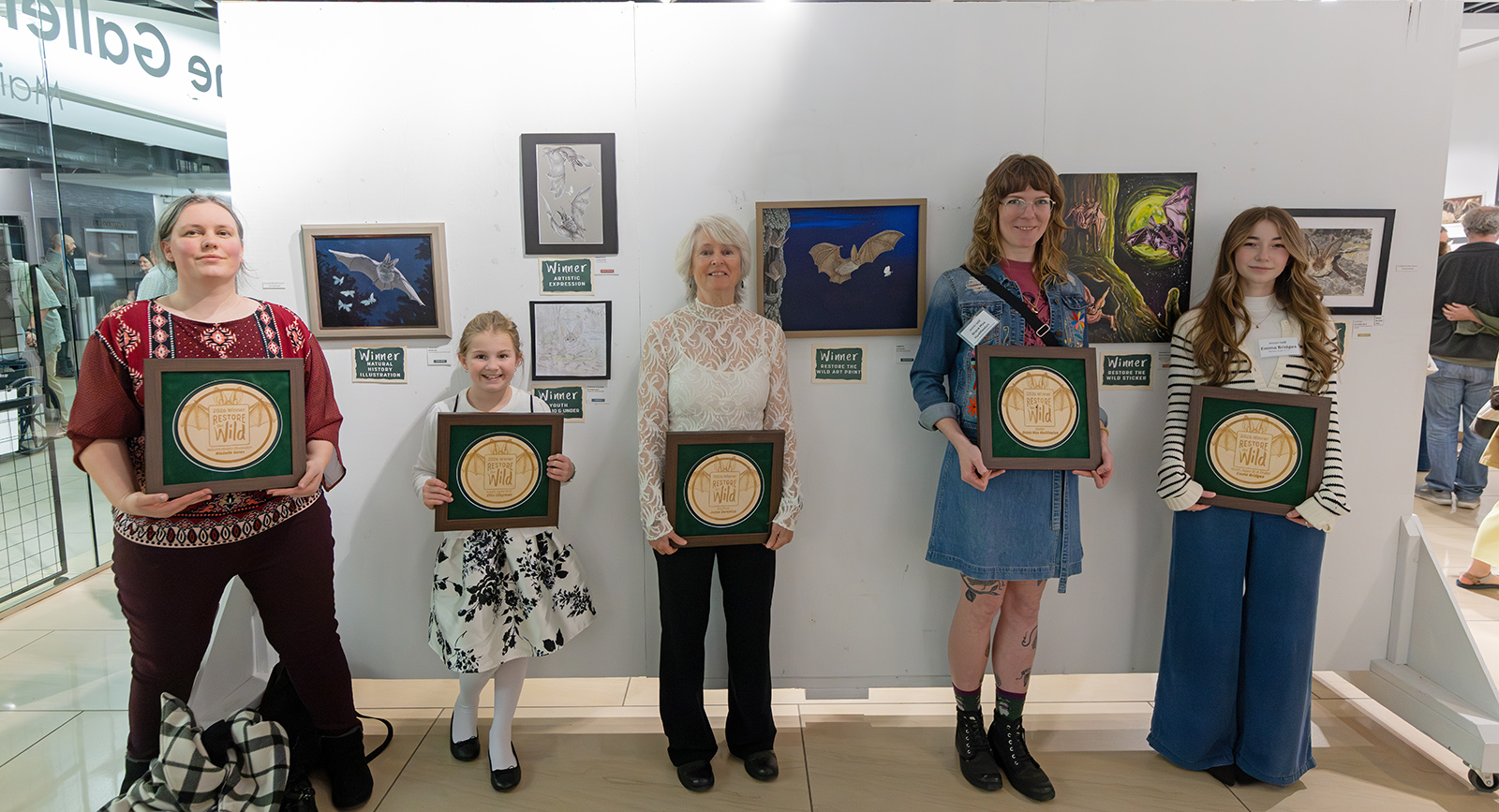
Winners of the Restore the Wild Artwork Competition included (from left) Michelle Gates (Natural History Illustration); Ellie Chapman (Youth, 10 and Under); Joyce Cornelius (Fine Art Print); Grace Mae Huddleston (Sticker); and Emma Bridges (Youth, 11-17).
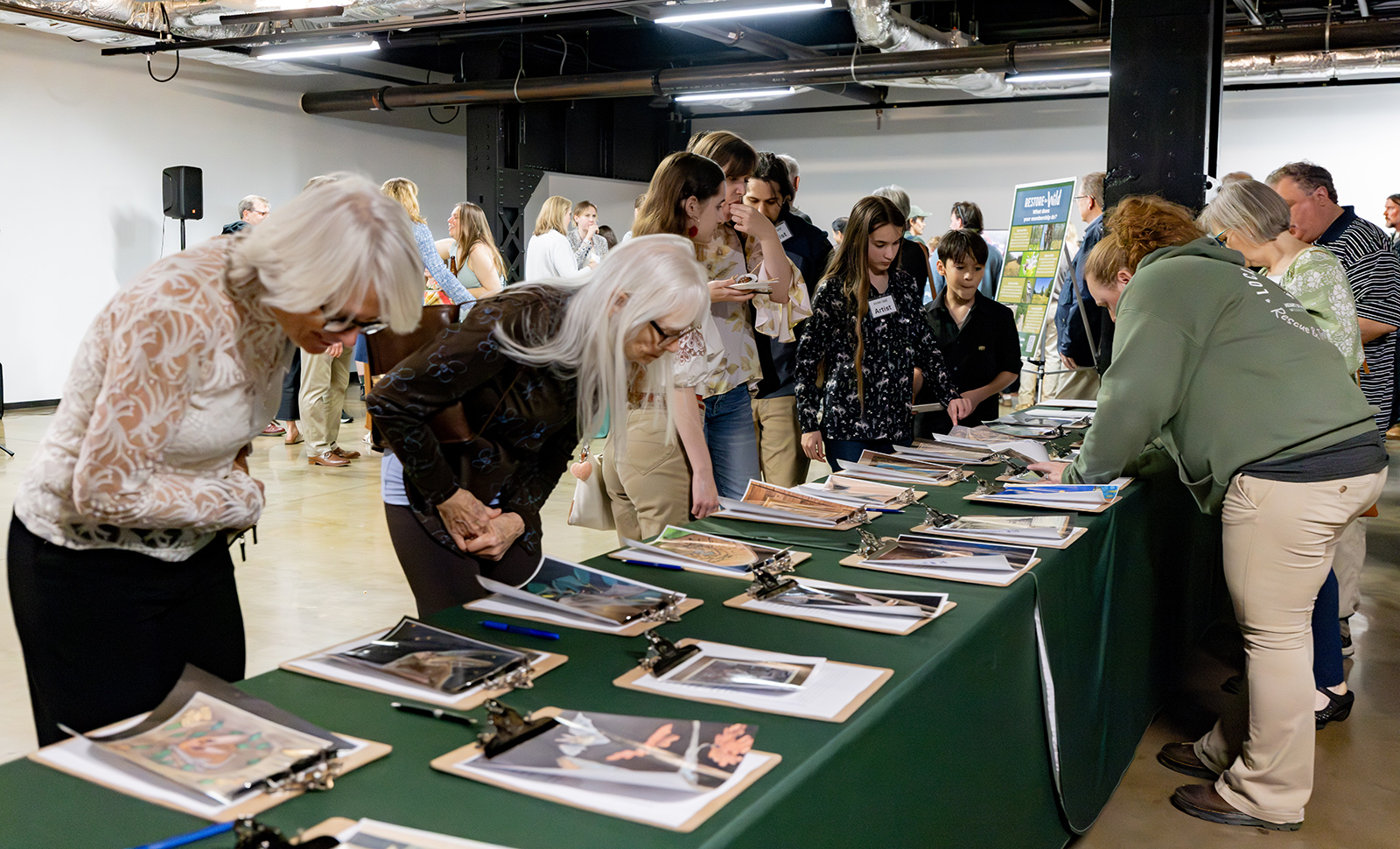
The Opening Reception include a silent auction of selected artworks and other items.
Virginia has more than 900 species of wildlife whose numbers are in decline mostly because of impacts to their habitat—natural areas that provide necessary food, water, and shelter. DWR is the lead agency in Virginia for the conservation of wildlife and wildlife habitat. DWR’s Restore the Wild initiative allows DWR to expand the work the agency does to preserve, establish, and maintain vital wildlife habitat areas and keep Virginia’s wild places wild. Donations to Restore the Wild and purchase of Restore the Wild merchandise provide funds directly for DWR habitat projects that benefit Virginia’s wildlife, including Species of Greatest Conservation Need.
Find out more about DWR’s Restore the Wild initiative and consider making a donation or purchasing merchandise to help restore and maintain essential habitat for Virginia’s wildlife. You can visit the Restore the Wild Artwork Exhibition at The Gallery at Main Street Station, 1500 E. Main St., Richmond, VA 23219, daily 8:00 a.m. – 5 p.m., until Sunday, March 29.
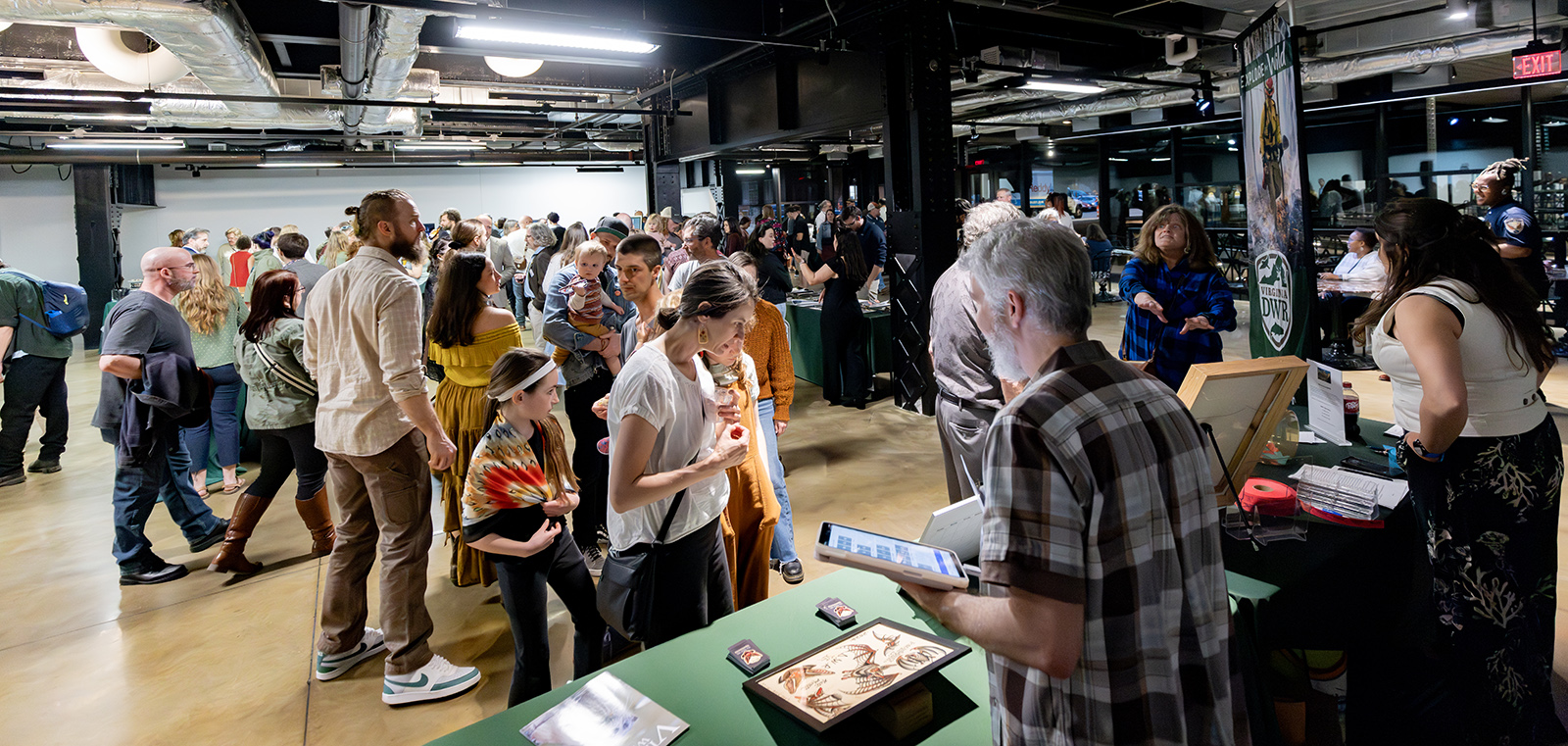
Attendees at the Opening Reception had the opportunity to purchase Restore the Wild merchandise and other items.
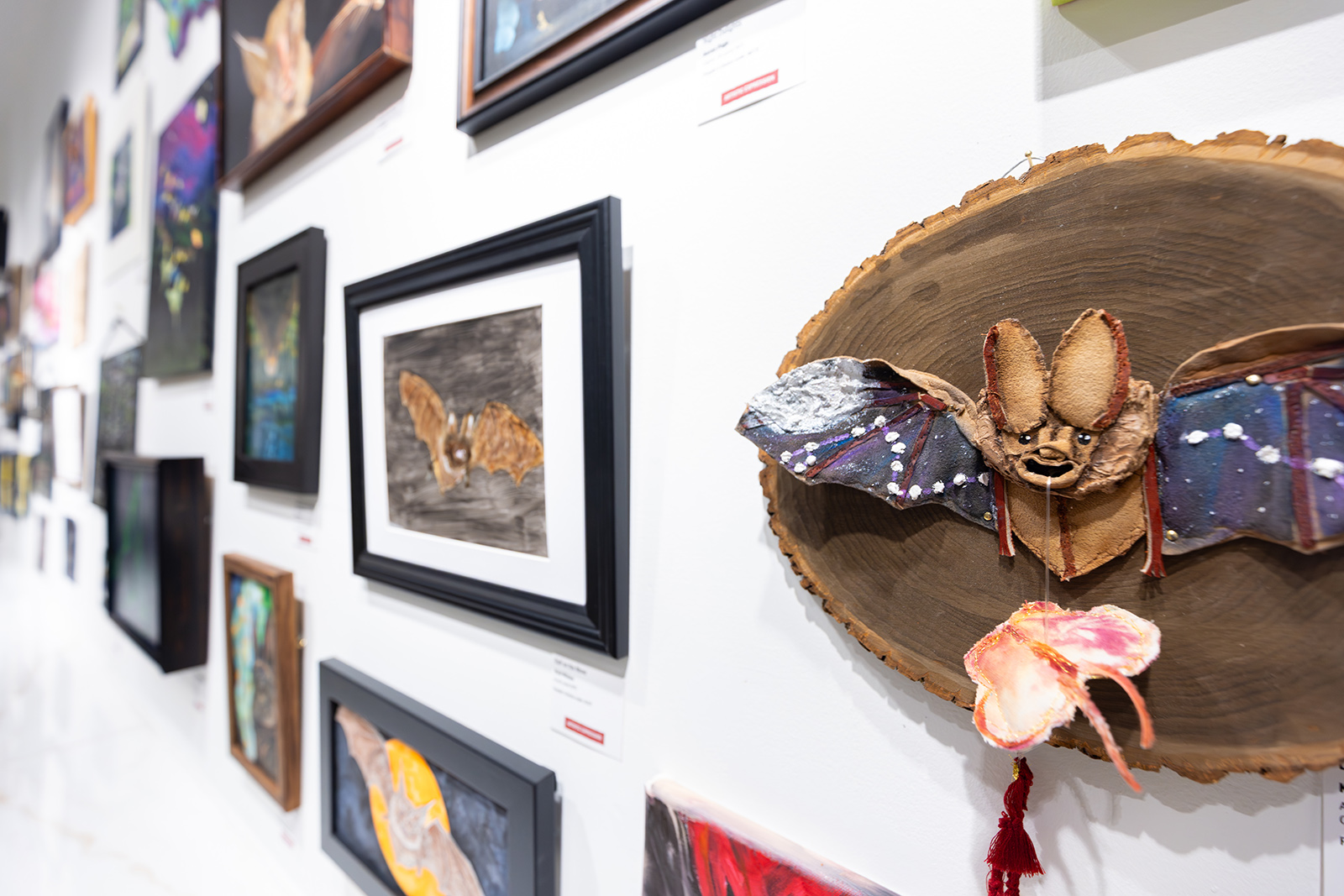
More than 250 pieces of art were submitted to the Restore the Wild Artwork Competition, and they all were hung for the Opening Reception.
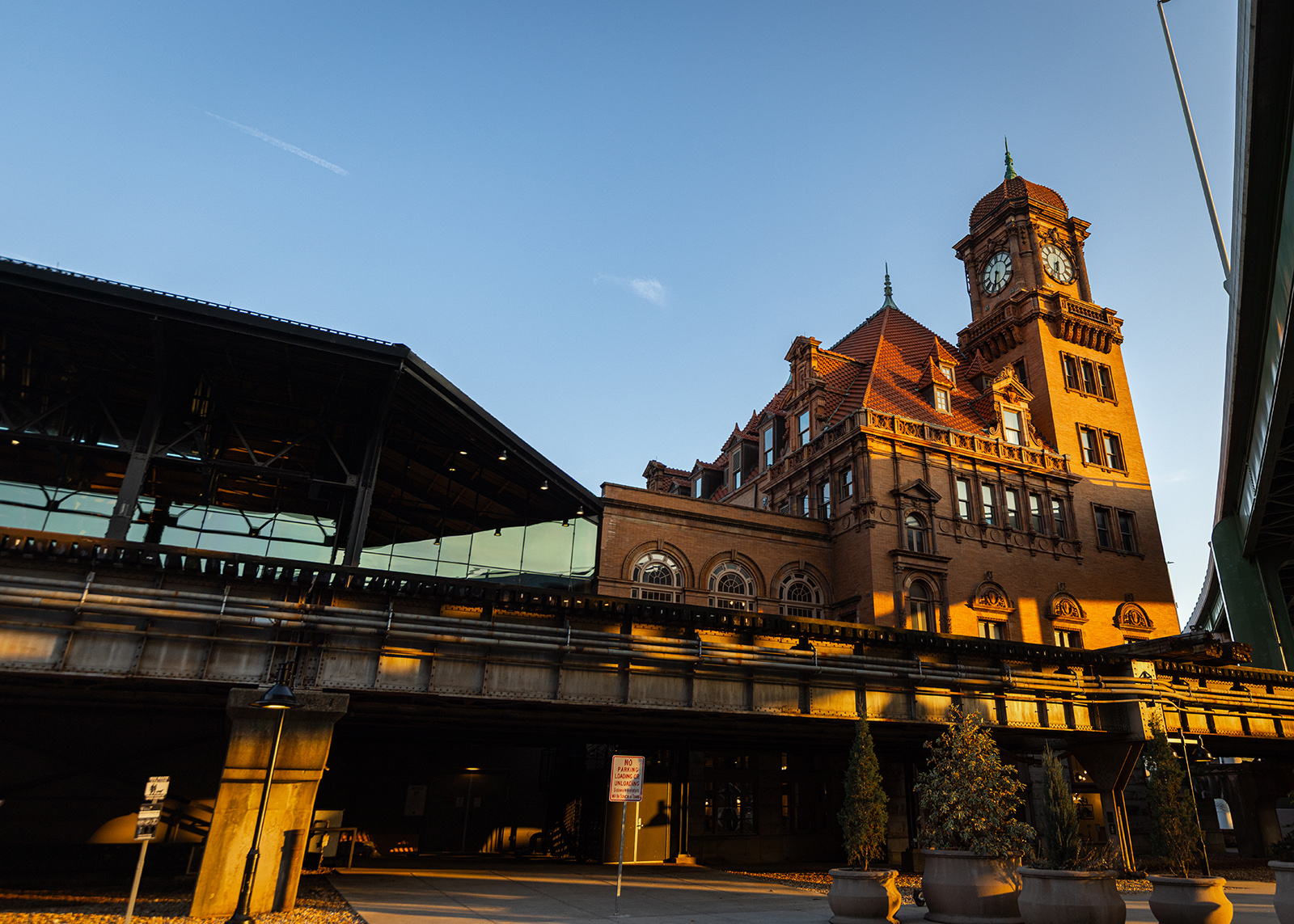
Main Street Station in Richmond is the site of the Restore the Wild Artwork Exhibition.
Legal Disclaimer:
EIN Presswire provides this news content "as is" without warranty of any kind. We do not accept any responsibility or liability for the accuracy, content, images, videos, licenses, completeness, legality, or reliability of the information contained in this article. If you have any complaints or copyright issues related to this article, kindly contact the author above.
